
Odoo IoT Integration: Real-Time Data for Efficiency
Digital Transformation
Dec 11, 2025
Integrating IoT with ERP systems enables real-time data collection, boosts efficiency, and reduces costs, transforming business operations.
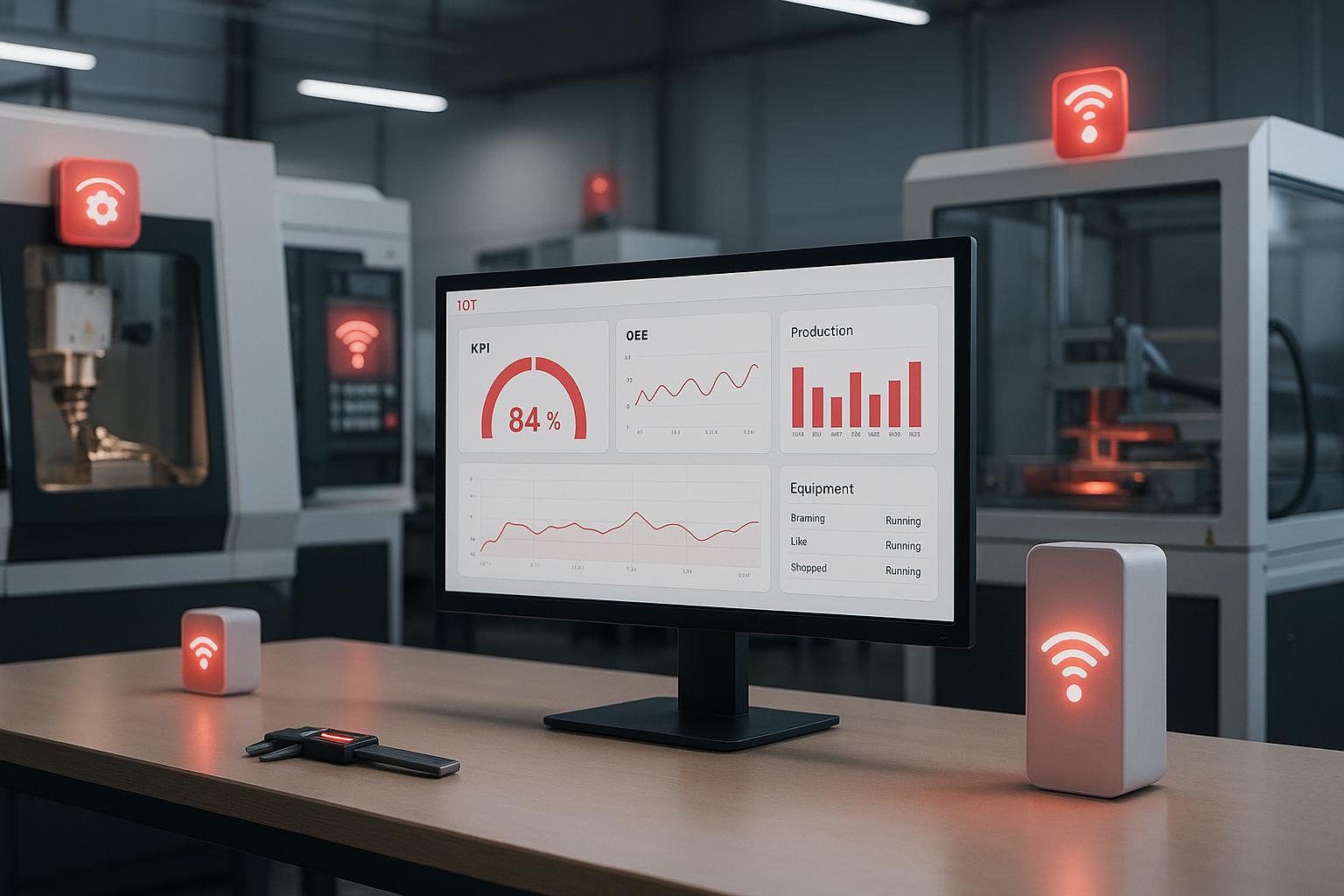
Odoo IoT integration connects physical devices directly to your ERP system, enabling real-time data collection to improve operations. Here's what you need to know:
Real-Time Monitoring: IoT devices like sensors, barcode scanners, and payment terminals feed live data into Odoo, reducing delays and errors.
Automation: Tasks like inventory updates or equipment monitoring are automated, cutting down on human error and boosting accuracy.
Predictive Maintenance: Sensors detect early signs of equipment issues, helping businesses schedule repairs and avoid costly downtime.
Cost Efficiency: While initial setup costs exist, businesses save over time through reduced labor, fewer errors, and optimized maintenance.
Scalability: IoT systems grow with your business, unlike manual methods that require proportional workforce expansion.
For businesses, especially in sectors like manufacturing and logistics, IoT integration with Odoo offers a clear path to better decision-making, reduced costs, and streamlined operations. While manual processes may seem simpler upfront, they often lead to inefficiencies and higher long-term expenses.
1. Odoo IoT Integration
Data Accuracy and Timeliness
Integrating IoT devices with Odoo revolutionizes how businesses handle data by automating processes and delivering real-time updates. Instead of relying on manual entry, IoT-connected devices like RFID scanners instantly update inventory levels, ensuring accuracy at all times. Similarly, scales connected to the system can send weight measurements directly to the inventory module, eliminating the risk of transcription errors.
This seamless data flow means businesses can rely on up-to-the-minute information rather than outdated reports. For instance, temperature sensors monitoring storage conditions can immediately notify managers if readings fall outside acceptable ranges, enabling quick corrective action. By capturing events in real time, businesses can significantly reduce errors across operations.
Reducing Human Error
Manual data entry is prone to typos and misinterpretations, but Odoo IoT integration dramatically reduces these risks. For example, a connected scale that transmits weight data directly into the inventory system removes the possibility of human error during input.
In addition, automated alerts and triggers ensure that critical actions are based on accurate, real-time data IoT sensors continuously monitor equipment and inventory, notifying the appropriate staff when intervention is required. This automation not only ensures data consistency but also enhances system reliability and minimizes downtime.
Downtime and Maintenance Efficiency
Accurate data collection through IoT devices also supports predictive maintenance by monitoring equipment performance in real time. Sensors can detect early warning signs, such as unusual vibrations or temperature fluctuations, signaling potential issues before they escalate. This allows businesses to schedule maintenance proactively, reducing unexpected downtime and extending the life of their equipment.
One manufacturing company, for instance, saw a 30% reduction in machine downtime after implementing predictive maintenance with Odoo. By addressing issues before they cause failures, maintenance teams can plan repairs during scheduled downtime, avoiding costly emergency fixes and disruptions in production.
Accelerating Decision-Making
Real-time IoT data empowers businesses to make faster, more informed decisions. When production bottlenecks arise or inventory levels dip, automated alerts allow managers to act immediately rather than waiting for outdated reports. This agility enables proactive adjustments to workflows and resource allocation based on current conditions.
In fast-paced industries like manufacturing and logistics, this capability is crucial. Instant notifications help decision-makers resolve issues - whether related to supply chain disruptions, equipment failures, or quality control - before they escalate into bigger problems.
Cost Considerations
While integrating IoT devices with Odoo involves upfront costs for hardware, software licenses, and system setup, the long-term savings often outweigh these initial expenses. Businesses save significantly through reduced labor costs, fewer errors, and lower maintenance expenses. For example, a logistics company using IoT to monitor transport conditions reported a 20% reduction in losses from damaged perishable goods.
Predictive maintenance also leads to substantial savings. By automating equipment monitoring and addressing potential issues early, companies can reduce maintenance costs over time, achieving a strong return on their initial investment. These savings accumulate, making IoT integration a cost-effective choice for businesses aiming to improve efficiency and reliability.
IoT: Unleash the Full Potential of Odoo's
2. Manual Operations
Manual operations face challenges that Odoo's IoT integration avoids, particularly when it comes to delays, inaccuracies, and inefficiencies.
Data Accuracy and Timeliness
Relying on manual data collection and entry often results in outdated and unreliable information. For example, inventory counts or sensor readings recorded hours - or even days - after the fact leave businesses working with stale data. This lag can disrupt operations and decision-making.
On top of delays, inconsistencies in how data is recorded also create problems. Think about temperature readings being rounded differently or weights being measured in varying units - these small discrepancies add up. Together, delayed entries and inconsistent methods make it harder to maintain accurate records and increase the likelihood of errors.
Human Error Rates
Human error is another significant drawback of manual operations. Fatigue, distractions, or simply a lack of attention can lead to mistakes that ripple through processes. Without systems in place for immediate validation, these errors often go unnoticed for extended periods.
For instance, discrepancies might only come to light during audits or when physical inventory counts don’t match recorded data. By the time the issue is discovered, operations could already be impacted, and tracing the error becomes both time-consuming and expensive.
Downtime and Maintenance Efficiency
When it comes to maintenance, manual systems tend to rely on fixed schedules or reactive repairs. This approach can lead to unnecessary servicing of equipment that’s still functioning well or, worse, costly emergency repairs when something fails unexpectedly.
Outdated tools like paper logs or basic spreadsheets don’t provide a clear picture of an asset’s performance history. Without detailed records, maintenance teams struggle to identify trends or predict failures, making it harder to plan replacements or manage spare parts effectively.
Decision-Making Speed
Manual processes often create bottlenecks when it’s time to make decisions. Since data has to be compiled and verified first, managers are left waiting, which delays problem-solving.
The lack of real-time insights means decisions are frequently based on incomplete or outdated information. Without immediate access to details like production rates, inventory levels, or equipment status, managers are forced to rely on estimates or assumptions - neither of which guarantees accuracy.
Cost Implications
All these inefficiencies come with a price tag. Manual operations lead to higher labor costs, as well as expenses tied to errors - like emergency purchases, overtime, or reworks. These costs can quickly surpass the savings businesses might hope to achieve by sticking with manual methods.
Additionally, training and maintaining institutional knowledge present ongoing hurdles. New hires need significant training to learn manual procedures, and when experienced employees leave, their knowledge often leaves with them. Ensuring consistency across shifts and departments requires constant oversight and quality checks, further driving up costs.
Transform Your Business with W4 Martech
Leverage advanced digital marketing and IT solutions to expand your reach into the Chinese Market, streamline operations, and enhance customer interactions. Explore tailored services like Odoo consultancy, DevOps, and ChatGPT integration to drive growth and efficiency.
Pros and Cons
Looking at Odoo IoT integration versus manual operations sheds light on how each approach impacts efficiency, costs, and scalability - key factors in shaping long-term business success.
Odoo IoT integration offers real-time data accuracy and minimizes delays, but it comes with upfront costs for IoT sensors, network infrastructure, and employee training. On the other hand, manual operations allow businesses to maintain direct control without relying on technology, though they often face risks of human error and slower data collection. While IoT requires a higher initial investment, it generally leads to lower operational costs over time due to increased efficiency. In contrast, manual methods can rack up hidden expenses from errors and missed opportunities.
Here's a breakdown of the key differences:
Aspect | Odoo IoT Integration | Manual Operations |
|---|---|---|
Data Accuracy | Automated, real-time data with minimal errors | Prone to human error and inconsistent records |
Response Time | Instant alerts and notifications | Detection delays, often during scheduled checks |
Initial Investment | High - requires sensors, infrastructure, training | Low - relies on existing tools and workforce |
Ongoing Costs | Lower operational costs; planned maintenance | Higher labor costs; unexpected repair expenses |
Scalability | Easily expandable across locations | Workforce must grow proportionally |
Maintenance | Predictive, condition-based scheduling | Reactive or fixed-schedule maintenance |
Decision Making | Real-time, data-driven insights | Based on periodic reports and estimates |
Training Requirements | Initial tech training, then minimal upkeep | Continuous training needed for consistency |
Reliability | Dependent on network and power | Independent of technology infrastructure |
Flexibility | Updates required for system changes | Adapts quickly to new procedures |
While IoT systems deliver speed and precision, they can falter if there’s a network or sensor failure. Manual methods, though free from such risks, often lack the efficiency and accuracy demanded by today’s fast-paced markets.
The best choice depends on factors like industry, company size, and growth goals. For example, large-scale manufacturing facilities with high production volumes are more likely to benefit from IoT integration. Meanwhile, smaller operations with less complex processes may find manual methods adequate for their needs.
Conclusion
Comparing Odoo IoT integration with manual operations highlights a clear advantage in efficiency and decision-making. While manual methods may come with lower upfront costs, they fall short in terms of accuracy, scalability, and delivering long-term benefits.
Businesses that adopt Odoo IoT solutions benefit from instant data collection, predictive maintenance, and automated monitoring. Although there’s an initial investment in sensors and infrastructure, the payoff comes in the form of reduced labor costs, fewer errors, and faster, data-driven decision-making. This level of efficiency becomes even more valuable as operations grow in scale.
Scalability is a critical factor for growing businesses. IoT systems adapt easily to expanding operations, whether across multiple locations or production lines. In contrast, manual methods often require proportional increases in workforce and resources, which can stretch budgets and compromise consistency.
To fully realize these benefits, proper implementation and ongoing support are essential. This is where working with experienced professionals makes a difference. Experts like W4 Martech Technology For Business deliver tailored Odoo IoT solutions, offering custom app development, system customization, and comprehensive maintenance services. Their focus on customer needs ensures that IoT solutions address specific business challenges effectively.
For companies looking to streamline operations and improve customer engagement with advanced IoT technology, this approach offers a clear path to a competitive edge. The real question isn’t whether to adopt IoT, but how quickly it can be implemented to stay ahead in today’s fast-paced, data-driven world.
FAQs
How does integrating IoT devices with Odoo enhance data accuracy and reduce manual errors?
Integrating IoT devices with Odoo takes the hassle out of data collection by automatically gathering real-time information from connected devices. This not only saves time but also cuts down on errors that often come with manual data entry.
Having instant access to accurate, up-to-date data means businesses can make smarter decisions, fine-tune their operations, and boost efficiency. The smooth integration ensures your processes are powered by reliable insights, helping improve both productivity and consistency.
What are the costs of setting up an IoT system with Odoo, and how can it help save money in the long run?
Setting up an IoT system with Odoo comes with some upfront expenses, including hardware, software subscriptions, and development fees. For instance, the Odoo IoT Box costs approximately $30 per month per device, while development costs can range anywhere from $45,000 to over $500,000, depending on the complexity of the system. On top of that, there are ongoing costs like connectivity fees, which typically fall between $4 and $12 per device each year.
While these initial costs might seem high, integrating IoT with Odoo can deliver substantial long-term savings. Automation helps cut labor expenses, predictive maintenance reduces downtime, and real-time data enables smarter decision-making. These benefits can significantly lower operational and maintenance costs, turning the initial investment into a worthwhile move for businesses looking to improve efficiency and increase productivity.
How can businesses seamlessly transition from manual processes to an IoT-enabled Odoo system?
Smooth Transition to IoT with Odoo
To make the shift to IoT technology seamless, businesses should start by pinpointing their specific needs and goals. Ask yourself: Which IoT devices and data points will genuinely enhance efficiency and improve decision-making? Careful planning and aligning these tools with your business objectives are essential steps in setting the stage for success.
Once the groundwork is laid, collaborate with seasoned Odoo consultants to seamlessly integrate IoT devices into your operations. This process involves configuring the platform, tailoring workflows to fit your business, and ensuring everything works smoothly with your current systems. Don’t forget to train your team - helping employees get comfortable with the new tools is key to unlocking the full potential of real-time data for smarter, faster decisions.
If you're in the Gulf region and looking for customized Odoo IoT solutions, W4 Martech offers expertise in consultancy, implementation, and system customization. Their services can help you streamline your operations and make the most of IoT technology.


