Odoo HRMS for GCC Labor Law Compliance
InternationalBusiness
Dec 12, 2025
Explore how Odoo HRMS ensures compliance with GCC labor laws through tailored HR solutions for payroll, leave management, and more.

Navigating labor laws in the GCC region - covering Saudi Arabia, UAE, Kuwait, Qatar, Bahrain, and Oman - requires HR systems that address specific legal requirements like WPS compliance, gratuity calculations, and sponsorship rules. Odoo HRMS stands out by offering tailored solutions for payroll, leave management, and document tracking, ensuring businesses meet these regulations seamlessly. Here's how it compares to other platforms:
Odoo HRMS: Supports multi-country operations with features like UAE WPS file generation, Saudi GOSI contributions, and multilingual contracts. It integrates with other business tools and offers high customization.
DOTS HRMS: Focused on specific markets like Qatar, it automates compliance tasks such as WPS reporting and end-of-service benefits but has limited multi-country functionality.
ERPNext HRMS: An open-source platform that allows flexibility and cost savings but may require technical expertise for GCC-specific configurations.
Quick Comparison
Platform | Key Strengths | Limitations |
|---|---|---|
Odoo HRMS | Multi-country compliance, WPS automation, and integration with other tools. | Steep learning curve and higher setup time. |
DOTS HRMS | Simplified for Qatar laws, WPS reporting. | Limited to Qatar and fewer integrations. |
ERPNext HRMS | Open-source, cost-effective, flexible. | Requires technical skills and extra setup. |
Selecting the right HRMS depends on your business size, technical needs, and regional focus. Odoo is ideal for multi-country operations, while DOTS and ERPNext fit smaller, localized needs.
1. Odoo HRMS
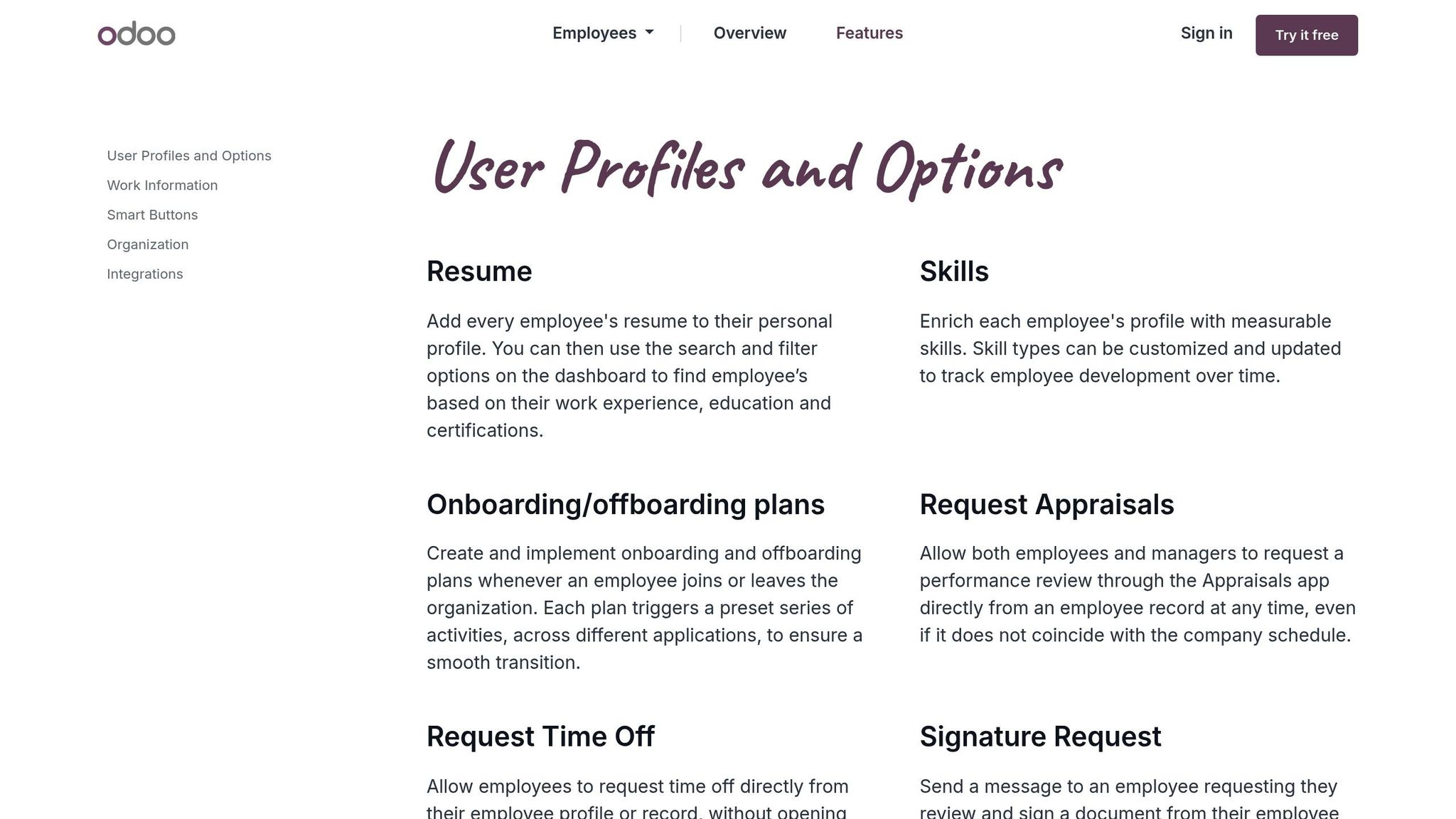
Odoo HRMS is designed to meet the unique HR management needs of businesses in the GCC region, ensuring compliance with local labor laws. Its modular design allows companies to implement only the features they need while adhering to the diverse legal requirements across GCC countries. Here’s a closer look at how Odoo HRMS aligns with these demands.
Odoo is equipped to handle country-specific requirements like Saudi GOSI contributions, UAE WPS file generation, and Kuwait labor law calculations. This adaptability allows businesses operating across multiple GCC nations to maintain unified HR processes while staying in line with local regulations.
One of the standout features of Odoo HRMS is its payroll automation, which simplifies compliance with GCC labor laws. The platform calculates salaries, overtime, allowances, and deductions based on local regulations. Additionally, it generates WPS-compliant salary files for UAE-based companies, meeting the standards set by the Central Bank and Ministry of Labour. With support for multiple tax structures and currencies, Odoo HRMS is particularly well-suited for businesses with operations spanning different GCC countries.
The system also streamlines the calculation of end-of-service benefits. Odoo applies UAE gratuity rules and other GCC-specific formulas to ensure accurate final settlements, minimizing the risk of errors that could lead to disputes or penalties.
Odoo’s leave management system is another key feature, tailored to accommodate the unique leave structures in GCC countries. It supports various leave types, including annual leave, sick leave, maternity leave, and Hajj leave, all configured to match local entitlements. The platform automatically tracks leave balances and applies country-specific rules for accrual and usage.
When it comes to document management and visa tracking, Odoo HRMS addresses critical compliance needs. The system stores and monitors employee documents such as visas, passports, labor cards, and Emirates IDs. It also provides expiration alerts, helping HR teams stay ahead of deadlines and avoid legal risks tied to expired documentation.
The platform’s contract management features are designed with GCC workplaces in mind. It supports multilingual contracts in both English and Arabic, ensuring legal compliance. Additionally, it manages probation periods and notice requirements based on the regulations of each GCC country.
Odoo HRMS also excels in system integration, connecting seamlessly with accounting, project management, and CRM tools. This creates a unified view of business operations. Moreover, it integrates with biometric attendance systems, enabling precise time tracking for overtime calculations.
The customizability of Odoo HRMS allows businesses to tailor the platform to their specific needs, whether they’re managing basic payroll or complex multi-country operations. It supports multiple languages, including Arabic and English, making it ideal for managing diverse workforces in the GCC.
To keep HR teams informed, the platform includes built-in reporting and compliance alerts. Its dashboard provides real-time updates on payroll summaries, visa expirations, leave balances, and other critical metrics, helping organizations avoid costly errors and maintain continuous compliance with GCC labor laws. These features highlight Odoo HRMS’s ability to serve as a reliable solution for HR management in the region, setting the stage for comparisons with other platforms.
2. DOTS HRMS
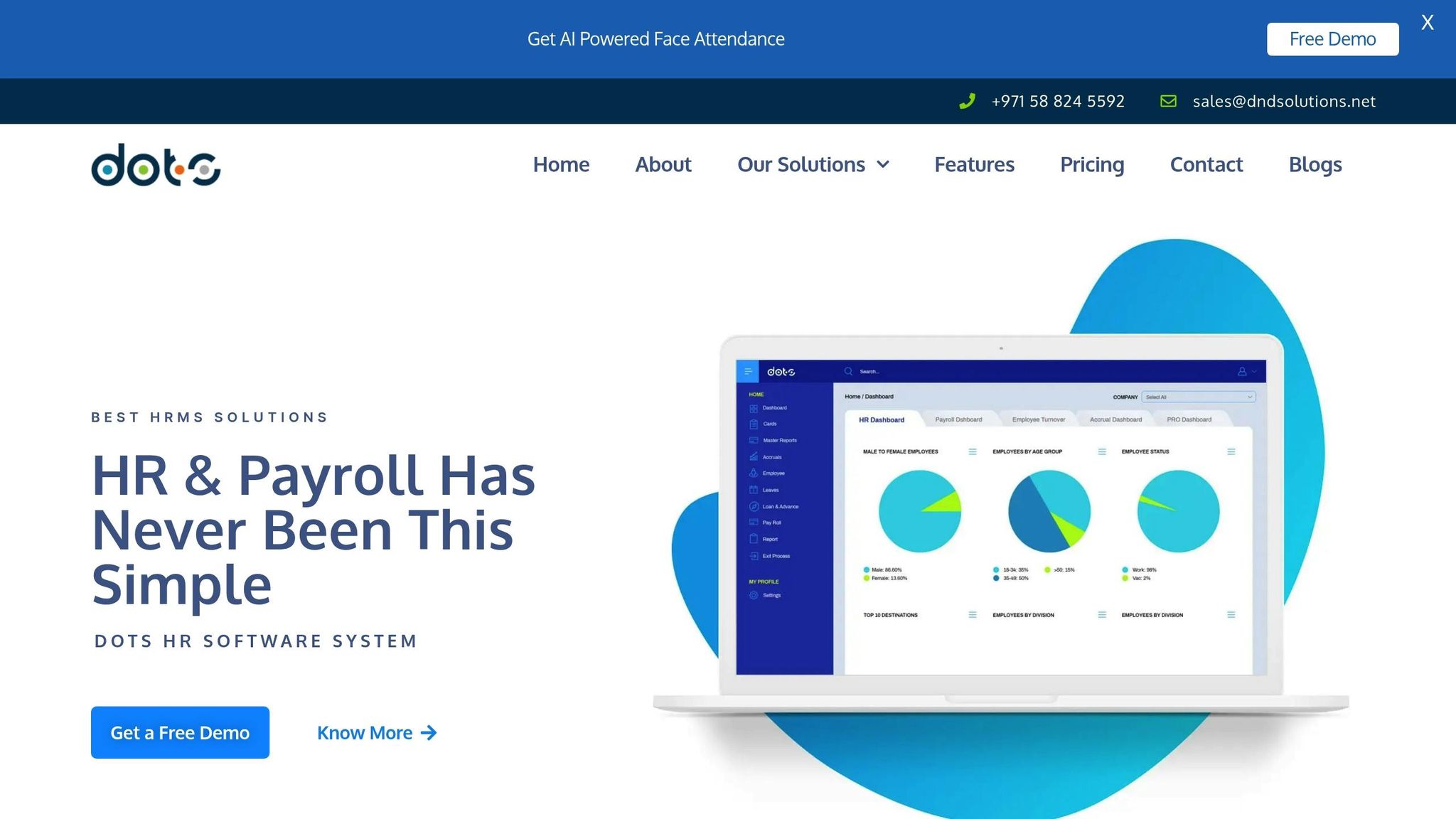
DOTS HRMS takes a tailored approach to complying with GCC labor laws, focusing on key markets like the UAE, Qatar, and Saudi Arabia. This regional emphasis allows the platform to offer features that cater specifically to the legal requirements of these countries.
One standout feature is its automated calculation of end-of-service benefits. DOTS HRMS ensures gratuity payments are processed in line with local legal standards, streamlining the final settlement process for employees leaving their roles.
When it comes to payroll compliance, the platform supports the Wage Protection System (WPS) by generating all necessary reports and documents required by GCC authorities. This functionality helps reduce the administrative workload tied to salary compliance.
DOTS HRMS also excels in leave management, offering tools designed around GCC-specific leave policies. These include customizable leave policies, online leave application forms, and automated processes for leave settlements - whether it’s payouts or carrying over unused leave - ensuring adherence to local regulations.
Attendance tracking is another area where DOTS HRMS shines. It supports multiple shifts and duty rosters while automatically calculating annual leave provisions. These provisions are seamlessly integrated with payroll, ensuring employees are compensated accurately.
Next, we’ll take a closer look at ERPNext HRMS to explore its approach to GCC labor law compliance.
3. ERPNext HRMS
ERPNext provides an open-source, modular HR solution tailored for businesses needing to comply with GCC labor laws. It stands out for its ability to adapt to specific business needs, offering extensive customization options. Like Odoo HRMS and DOTS HRMS, ERPNext prioritizes flexibility and ensures alignment with regional regulations. Here's a closer look at how ERPNext handles key HR functions while adhering to GCC requirements.
ERPNext simplifies gratuity calculations by automating end-of-service benefit computations. It factors in employee tenure and final salary to deliver precise settlements in line with GCC labor laws.
When it comes to payroll management, the platform accommodates various salary structures. It generates detailed reports while ensuring compliance with the Wage Protection System across Emirates and Gulf states.
Leave management is another strong suit of ERPNext. It allows businesses to configure different types of leave - annual, sick, maternity, or even Hajj leave - based on local requirements. Leave balances are automatically updated and linked to payroll for seamless processing.
Attendance tracking in ERPNext is designed to handle diverse shift patterns, including adjustments for Ramadan hours, regional weekend differences, and overtime calculations that meet local standards.
The platform also integrates effortlessly with accounting, project management, and third-party applications. This ensures data consistency across business operations while keeping compliance requirements intact.
ERPNext's modular structure supports businesses of all sizes, from single-country setups to multi-national operations across the GCC. Its scalability allows companies to add features as their needs grow.
Finally, its open-source nature provides transparency and full control over HR data - critical for businesses operating in regulated industries within the GCC. These features make ERPNext a strong contender alongside other HR systems discussed earlier.
Transform Your Business with W4 Martech
Leverage advanced digital marketing and IT solutions to expand your reach into the Chinese Market, streamline operations, and enhance customer interactions. Explore tailored services like Odoo consultancy, DevOps, and ChatGPT integration to drive growth and efficiency.
Advantages and Disadvantages
When it comes to managing GCC labor law compliance, each HRMS platform comes with its own set of strengths and challenges. Here's a quick comparison of how these platforms stack up:
Platform | Advantages | Disadvantages |
|---|---|---|
Odoo HRMS | • Localized payroll: Includes country-specific payroll modules for Saudi Arabia and the UAE in Odoo 19.0 | • Steep learning curve: Full ERP system can be complex to master |
DOTS HRMS | • Qatar-focused: Tailored specifically for businesses in Qatar | • Limited reach: Primarily caters to the Qatar market |
ERPNext HRMS | • Open-source flexibility: Full control over data and system modifications | • Localization gaps: Requires extra configurations for GCC-specific compliance |
This comparison underscores the key differences between the platforms. Odoo HRMS stands out for multi-company setups, ERPNext offers flexibility and cost savings, while DOTS HRMS is ideal for businesses focused solely on Qatar. The choice ultimately depends on your operational scope and technical requirements, making it crucial to align your HR technology with your compliance and business goals.
Conclusion
Odoo HRMS stands out as a robust option for businesses in the GCC region dealing with intricate labor law requirements. Its modular structure and strong localization capabilities make it an excellent choice for companies operating across multiple Gulf countries or planning to expand in the future.
The analysis highlights that flexibility and customization are key when selecting an HRMS for GCC compliance. With features like UAE WPS and Saudi GOSI integration, Odoo offers unmatched adaptability to local regulations. This reduces HR workloads, improves payroll accuracy, and helps businesses avoid compliance penalties.
By addressing specific regulatory needs, businesses not only lower legal risks but also enhance their operational efficiency. For GCC companies, prioritizing HRMS solutions that provide localization, modularity, and automation is crucial. As labor laws in the Gulf region continue to evolve, having an HRMS that can adapt to these changes is vital. Odoo’s open architecture and network of partners - such as W4 Martech Technology For Business - ensure ongoing support for customization as regulations shift.
Beyond compliance, a well-designed HRMS brings additional benefits. Automated compliance tools reduce manual errors and free up HR teams to focus on strategic goals rather than routine administrative tasks. Whether you're a startup preparing for growth or an established enterprise with complex workforce needs, choosing an HRMS that scales with your business can help you avoid costly system migrations in the future.
Ultimately, selecting the right HRMS depends on your specific requirements. This comparison confirms that tailored, flexible solutions are essential for navigating the GCC’s labor complexities. While options like DOTS HRMS or ERPNext may suit smaller organizations with simpler needs or tighter budgets, Odoo HRMS offers the ideal mix of functionality, compliance support, and scalability for most businesses in the region.
FAQs
How does Odoo HRMS help businesses in GCC countries comply with local labor laws?
Odoo HRMS makes it easier for businesses to comply with GCC labor laws by providing flexible settings that align with the legal requirements of each country. For instance, it accommodates country-specific payroll systems like the Wage Protection System (WPS) in the UAE, ensuring salaries are processed both accurately and in compliance with regulations.
Additionally, the platform offers tools to handle local contributions, approvals, and legal reporting, simplifying the process of adhering to regional labor standards. By aligning HR and payroll functions across various Gulf countries, Odoo HRMS minimizes the risk of non-compliance while optimizing day-to-day operations.
How does Odoo HRMS help businesses in the GCC region manage HR operations across multiple countries?
Odoo HRMS streamlines HR operations across multiple countries in the GCC region with tools like localized payroll management, ensuring that businesses stay aligned with each country's labor laws and payroll guidelines. This feature helps companies manage payroll accurately while adhering to local regulations.
The system also supports multi-company management, enabling HR teams to handle operations independently for various entities while retaining centralized oversight.
On top of that, Odoo's global payroll compliance tools are designed to adjust to different legal frameworks and currency standards, ensuring smooth and lawful HR processes. These capabilities simplify managing HR tasks across Gulf countries, making it easier to stay on top of regional requirements.
What makes Odoo HRMS a great choice for businesses in the GCC region with complex labor law requirements?
Odoo HRMS aims to make HR management easier for businesses in the GCC region by automating essential tasks such as payroll, attendance tracking, and compliance management. By reducing manual effort, it helps ensure accuracy and enables companies to meet the specific labor law requirements of each Gulf country.
The platform provides a unified system for employee management, simplifying HR operations across different jurisdictions. This is particularly helpful in the GCC, where labor laws can differ widely between nations. With Odoo HRMS, businesses can manage their processes more efficiently, maintain compliance, and concentrate on expanding their presence in the region.


