Real-Time Payment Tracking for Gulf eCommerce
Digital Transformation
Dec 12, 2025
Explore how real-time payment tracking is revolutionizing eCommerce in the Gulf, enhancing cash flow, customer satisfaction, and operational efficiency.
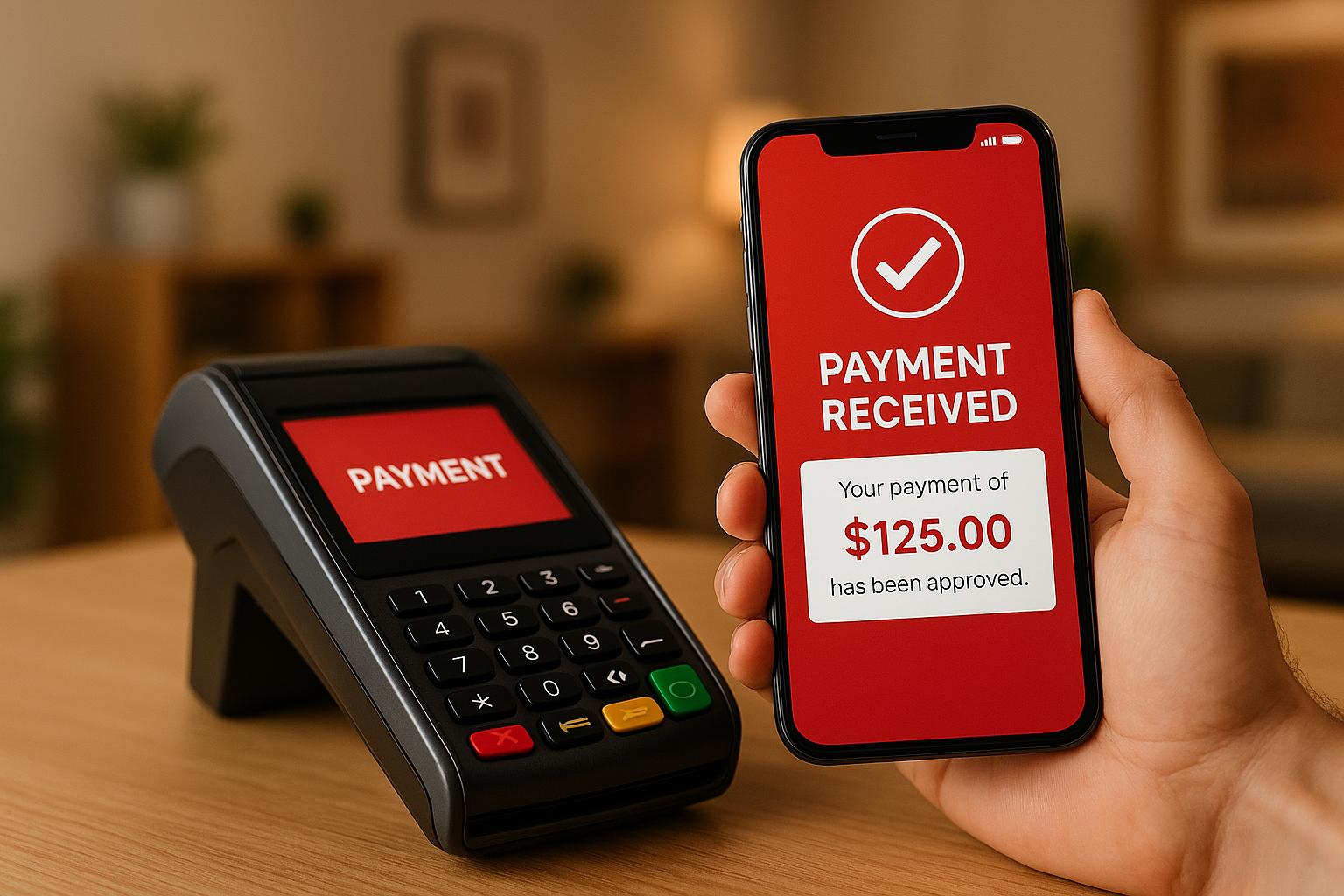
Real-time payment tracking is transforming eCommerce in the Gulf, enabling businesses to process and monitor transactions instantly. This system eliminates delays, improves cash flow, and enhances customer satisfaction by providing immediate payment confirmations. With the Gulf's eCommerce market projected to grow significantly - reaching $17 billion in the UAE by 2025 - real-time payments are becoming essential for staying competitive. Here's why it matters:
Faster Transactions: Payments settle in seconds, boosting revenue accessibility.
Improved Transparency: Detailed transaction data simplifies reconciliation and minimizes errors.
Customer Benefits: Instant confirmations and quicker access to services build trust.
Challenges: Cash-on-delivery reliance, cross-border complexities, and compliance hurdles persist.
Future Trends: Blockchain, AI, and digital currencies like the UAE’s upcoming Digital Dirham will further reshape the landscape.
To succeed, Gulf businesses must adopt robust systems that handle multi-currency operations, regional payment methods, and regulatory requirements. Real-time tracking is no longer optional - it's the foundation for thriving in a fast-paced digital economy.
Key Features of Real-Time Payment Tracking Solutions
When choosing a real-time payment tracking solution for Gulf eCommerce, businesses need systems that provide instant transaction alerts, multi-currency support, and seamless platform integration. These features address common challenges like delayed settlements, currency complexities, and integration issues, paving the way for better payment tracking.
Instant Transaction Alerts
Instant alerts are the cornerstone of modern payment tracking, offering real-time updates that replace post-purchase uncertainty with immediate clarity. Research shows that 70% of customers value order tracking for online shopping satisfaction, and 85% are more likely to return to a business that offers end-to-end tracking.
For Gulf businesses, these alerts solve a critical issue by confirming payments as they are received, processed, and settled. The benefits extend to customer service, reducing up to 70% of "Where Is My Order?" inquiries. This allows support teams to focus on complex issues, ultimately boosting customer satisfaction.
Modern systems go beyond basic notifications by delivering actionable push alerts that increase customer engagement. For example, campaigns using push notifications report a 40% performance boost, with mobile user sessions rising by 182% and purchases per user increasing by 116% on average.
These systems operate around the clock, ensuring businesses receive instant settlement confirmations and up-to-date transaction histories. This enables better cash flow management and supports real-time decisions related to inventory, fulfillment, and customer service. However, effective systems must also handle diverse currencies and integrate smoothly with various eCommerce platforms.
Multi-Currency and Regional Payment Support
The Gulf region's financial landscape is diverse, with customers expecting to pay in their local currencies using familiar methods. A reliable tracking system must support this complexity while ensuring accuracy and compliance across different regulations.
Key currency features include showing prices in local GCC currencies like AED, SAR, QAR, and KWD, with options for automatic conversion or fixed pricing. The system should also account for country-specific VAT rules, such as the 5% VAT applied across GCC member states.
Support for regional payment methods is equally essential. For instance, 45% of online purchases in Saudi Arabia are made with debit cards, and up to 75% of transactions rely on cash-on-delivery. Tracking systems should accommodate:
Local Card Schemes: Mada (Saudi Arabia), KNET (Kuwait), Benefit (Bahrain), NAPS/Qpay (Qatar), and OmanNet (Oman)
Digital Wallets:Apple Pay, Google Pay, Samsung Pay, and regional players, with the market expected to grow from $20.5 billion in 2023 to $103.8 billion by 2032
Buy Now, Pay Later (BNPL): Popular options like Tabby, Tamara, Spotii, and Postpay, with Saudi Arabia's BNPL payments projected to grow 21.7% annually to $1.4 billion
Instant Payment Platforms: SARIE (Saudi Arabia), UAE's Instant Payment Platform (IPP), and AFAQ by Gulf Payments Company
Bilingual support is another critical feature. Systems should offer payment confirmations, receipts, and tracking details in both Arabic and English, with automatic language detection based on IP or browser settings.
Integration with eCommerce Platforms
The success of real-time payment tracking often hinges on how well it integrates with existing eCommerce platforms. Gulf businesses rely on a mix of global platforms like Shopify, Magento, and WooCommerce, as well as custom-built solutions.
Seamless integration connects payment gateways with order management, inventory, CRM, and ERP systems. This ensures that payment updates are reflected across all business operations. For companies operating in multiple GCC countries, unified backends simplify region-specific pricing, tax calculations, and compliance while maintaining consistent user experiences.
API integration is particularly important for connecting with regional payment providers like UAE's IPP or systems such as MADA, SADAD, SARIE, and ESAI in Saudi Arabia. Automated reconciliation, which matches payments to orders without manual input, is another must-have feature - especially since 58% of Middle East consumers prefer digital payment methods.
For businesses using Odoo-based systems, custom apps can incorporate local payment methods, currency handling, and compliance features while streamlining overall operations.
Steps to Implement Real-Time Payment Tracking
Setting up real-time payment tracking involves a structured process that addresses technical systems, payment gateways, and compliance with regulations. Businesses in the Gulf region face unique challenges due to regional requirements, all while managing the demands of a fast-growing digital payments market. In 2023 alone, the region saw 855 million real-time payment transactions, with projections reaching 3 billion by 2028. Here’s a step-by-step guide to modernizing your payment systems.
Assessing Business Needs and Infrastructure
Start by evaluating your current payment systems to identify what needs updating. Many businesses in the Gulf still rely on outdated technology that can slow down the adoption of real-time payment systems. This assessment should focus on several key areas.
Legacy Systems and Cloud Readiness: Determine if your existing systems can integrate with modern cloud-based solutions. Cloud platforms offer flexibility and efficiency compared to traditional on-premises systems. For example, many businesses in the Middle East and Africa are shifting to cloud platforms to move away from outdated setups.
Unified API Suites: Ensure your systems support unified API suites that integrate ledgers, payments, and compliance. This approach can significantly reduce complexity and speed up implementation.
A great example of modernization is Tanmeya Capital, a Saudi lender that partnered with Stitch to overhaul its fragmented systems. The result? They launched an integrated platform in just 28 days, cutting product launch times dramatically. Fahad Al Balooshi, Vice President of Investment Banking at Tanmeya Capital, explained:
Data Sovereignty Compliance: Verify that your hosting solutions meet local data residency and sovereignty rules. Non-compliance can lead to costly custom solutions or exclusion from the market.
Payment Methods: Assess whether your infrastructure supports popular Gulf payment options like credit cards, digital wallets, BNPL (Buy Now, Pay Later), and QR code payments.
Once your infrastructure is ready, the next step is selecting a payment gateway that aligns with these updated requirements.
Selecting the Right Payment Gateway
Choosing a payment gateway is about balancing technical capabilities with regional expertise. Look for gateways that offer real-time transaction processing to improve cash flow management and minimize settlement delays.
Regional providers often bring an edge. For example:
PayTabs (Saudi Arabia): Offers online payment processing, invoicing, and mobile payment solutions tailored to the Gulf market.
Network International (UAE): Specializes in payment processing, fraud prevention, and merchant acquiring.
Telr (UAE): Provides secure, scalable online payment solutions with multi-currency support.
Moyasar (Saudi Arabia): Known for its user-friendly interfaces.
Multi-currency support is critical in the Gulf’s diverse financial landscape. Your gateway should handle local currencies, comply with VAT rules, and support regional payment methods.
Security features like fraud detection, tokenization, and 3D Secure authentication are non-negotiable. PCI DSS compliance is also essential for handling credit card payments. Additionally, the gateway should integrate seamlessly with your eCommerce platforms, inventory systems, and ERP solutions.
Scalability is key as your business grows. The gateway should handle increasing transaction volumes without performance issues and support expansion into new Gulf markets with minimal adjustments.
Once the gateway is in place, attention shifts to implementing strong security and compliance measures.
Security and Compliance Requirements
Security and compliance are critical in real-time payment tracking, especially with the Gulf’s strict regulatory environment. Businesses must navigate multiple compliance layers to ensure smooth operations.
Data Protection: Gulf states have introduced data protection laws similar to the EU’s GDPR. For instance, Saudi Arabia implemented its Data Protection Law in 2021, and the UAE followed suit in 2022. These laws require encryption, clear data retention policies, and local data storage.
Anti-Money Laundering (AML): AML compliance includes transaction monitoring, Know Your Customer (KYC) practices, and reporting suspicious activity. Enforcement is strict - penalties for non-compliance can be severe. For example, the UAE’s Central Bank fined two banks AED 5.8 million and AED 19.5 million in 2024 and 2025, respectively, for AML violations.
Authentication: Multi-factor authentication (MFA), including one-time passwords (OTPs) and biometric verification, is becoming standard for online transactions. Systems should also support passwordless logins to balance security with user convenience.
PCI DSS Compliance: This global standard is mandatory for businesses handling credit card payments. It outlines how to securely store, process, and transmit cardholder data.
Regional regulations add complexity. For instance, Saudi Arabia’s SAMA requires institutions to follow its Cybersecurity Framework, while the UAE’s Central Bank and NESA mandate specific rules for cloud use and financial data localization.
Real-time fraud detection tools powered by AI and machine learning are essential. These systems can identify subtle fraud patterns that traditional methods might miss. End-to-end monitoring enhances both security and scalability.
Third-Party Risk Management: Collaborating with cloud providers, payment service providers, or other vendors requires clear contracts. These agreements should include security mandates, regular audits, and incident reporting protocols.
The RegTech sector in the Middle East is growing rapidly, valued at USD 1.66 million in 2024 and expected to grow by 18.5% annually through 2029. Automated compliance tools are becoming indispensable. As Jarrod Koch, CEO of DivergeIT, puts it:
Transform Your Business with W4 Martech
Leverage advanced digital marketing and IT solutions to expand your reach into the Chinese Market, streamline operations, and enhance customer interactions. Explore tailored services like Odoo consultancy, DevOps, and ChatGPT integration to drive growth and efficiency.
Using Odoo for Real-Time Payment Tracking
Odoo brings together payment tracking across sales, accounting, and inventory, offering Gulf businesses a clear view of their payment flows. By seamlessly integrating transaction data across various business functions, it helps businesses make informed decisions. Plus, it supports multi-currency operations and ensures compliance with GCC VAT regulations. Let’s dive into how custom Odoo apps and integrations enhance real-time payment tracking for Gulf businesses.
Custom Odoo Apps for Payment Tracking
W4 Martech takes Odoo’s payment tracking capabilities to the next level by developing custom applications tailored to specific business needs.
One standout example is the Payment Status in Sale Order app (cr_sale_order_payment_status). This app provides detailed payment statuses - like "No Invoice", "Not Paid", "Partial Paid", "Fully Paid", and "Overdue" - directly within Sale Orders. It also calculates amounts due automatically and allows direct reconciliation.
Another useful tool is the Purchase Order & Vendor Bill Payment Tracking app (rcs_purchase_order_bill_details). It tracks billed amounts, payments made, and outstanding balances. Visual progress bars make it easy to see payment percentages at a glance.
W4 Martech also customizes Odoo to integrate Gulf-specific payment methods and ensure compliance with local regulations. These tailored apps include automated VAT calculations and connections to local banking systems. AI-powered features further streamline processes by reading, categorizing, and matching bills to payment records, cutting down on manual errors and speeding up accounting workflows - all while meeting evolving Gulf reporting standards.
Integrating Odoo with eCommerce Platforms
W4 Martech ensures Odoo integrates smoothly with existing eCommerce platforms and payment gateways, creating a unified system where payment data flows in real time.
The Tap Payment Gateway integration is specifically designed for Middle Eastern markets, supporting local payment methods and managing refunds, subscriptions, and saved cards.
A great example is Al Fateh Club in Saudi Arabia. They implemented Odoo to manage club activities and set up a live ticketing system linked to their website. This system processes real-time payments for tickets and other services.
Such integrations provide businesses with up-to-date financial visibility, tracking all transactions and generating accurate financial reports. They also ensure compliance with regional regulations. Additionally, Odoo’s AI capabilities monitor transactions in real time, flagging unusual activity and automating compliance audits.
System Support and Optimization
Once Odoo is integrated, maintaining its performance is key to ensuring effective real-time payment tracking. W4 Martech offers extensive support services to keep systems running smoothly.
AI-powered features automate payment reconciliation, matching payment records and speeding up accounting cycles. Performance tuning ensures database queries are optimized and integration points remain efficient, keeping the system responsive even during high-demand periods.
To protect sensitive financial data, W4 Martech provides regular security updates, monitors vulnerabilities, and implements additional safeguards.
Odoo’s analytical accounting features allow businesses to track payments by specific projects, departments, or cost centers. This level of detail supports precise financial reporting.
For Gulf businesses operating across borders, W4 Martech handles updates to regional compliance requirements, ensuring systems stay aligned with GCC regulations, including data localization and tax changes.
Future Trends in Real-Time Payments for Gulf eCommerce
As discussed earlier, real-time tracking is transforming eCommerce in the Gulf, and new technologies are pushing these advancements even further. These innovations promise to make payment tracking faster, safer, and more transparent across the region.
Blockchain and Digital Currencies
Central Bank Digital Currencies (CBDCs) are expected to play a major role in reshaping payment systems in the Gulf. For example, the UAE's Digital Dirham, set to launch in Q4 2025, will enable instant and verifiable transactions across the country's eCommerce ecosystem.
In addition, the UAE Ministry of Economy has partnered with blockchain firm Fluent to create the nation's first regulated stablecoin under the NextGen FDI program. This initiative, starting in 2024, aims to offer secure, tokenized settlement options for cross-border transactions.
Blockchain technology itself is a game-changer. It reduces transaction costs - typically under 1% compared to the 2–5% charged by credit card systems. Features like smart contracts automate payments and create tamper-proof records, significantly reducing fraud risks. Early adopters are already leveraging blockchain to enhance security and transparency. The UAE is also exploring CBDC-based trade corridors with partners like India to enable instant, 24/7 settlements.
These developments are paving the way for faster, more reliable, and secure payment systems powered by blockchain.
AI and Predictive Analytics
Artificial intelligence is another key driver of change in payment tracking. AI is enhancing operations by enabling real-time fraud detection and advanced pattern recognition. The financial services AI market in the Middle East is projected to grow from $625 million in 2023 to $4.704 billion by 2032. Emirates NBD, for instance, has developed over 100 AI models to improve efficiency and enable smarter, data-driven decisions.
AI-powered predictive analytics offers a proactive approach to fraud prevention by identifying suspicious patterns and anomalies in real time. These systems continuously improve by learning from new data, refining processes for more accurate payment tracking. Additionally, AI platforms consolidate data into unified dashboards, providing better visibility and enabling quicker responses to disruptions.
Improved Customer Experiences
Digital payment innovations are making transactions smoother and more convenient for consumers. The GCC Instant Payments Market is expected to reach $35 billion by 2035, and already, over 71% of eCommerce payments in the UAE are made using cards or mobile wallets. In October 2023, Al Etihad Payments - a subsidiary of the UAE Central Bank - launched the Aani platform, enabling transfers between major institutions in under ten seconds, with plans for expanded functionalities.
Biometric authentication is also gaining traction. For example, Dubai Islamic Bank integrated its digital banking platform with UAE PASS in August 2023, allowing secure, tap-based logins for faster payment access. Cross-border payment capabilities are advancing rapidly as well. In September 2023, Saudi Awwal Bank partnered with Wise for quick international money transfers, while DBS Bank and Mashreq Bank teamed up in June 2024 to enable same-day cross-border payments across Asia, Europe, and the Americas.
To fully unlock these benefits, the region will need stronger collaboration, consistent regulations, and ongoing user education.
These advancements are setting the stage for Gulf eCommerce platforms to deliver seamless, real-time payment experiences that will keep them competitive in a fast-evolving market.
Conclusion
Real-time payment tracking has become a game-changer for Gulf eCommerce businesses striving to remain competitive in today’s fast-paced digital economy. Recent statistics highlight the remarkable rise of real-time digital payments across the Middle East.
For Gulf businesses, the advantages are clear: better cash flow, quicker processing times, and happier customers thanks to instant payment confirmations. With 93% of Middle Eastern consumers reporting increased use of digital and mobile payments since the pandemic, businesses that hesitate to adopt these solutions risk being left behind.
The region is well-equipped to support this shift. All six GCC states now have real-time payment systems in place, and initiatives like the UAE's Instant Payment Platform could save up to $246 million while operating round the clock. Government-backed efforts to create cashless economies provide fertile ground for eCommerce expansion, setting the stage for strategic partnerships and long-term success.
As Gulf nations push forward with digital transformation, having the right technology partner is key. W4 Martech offers tailored eCommerce solutions for Gulf markets, including Odoo consultancy, custom app development, and seamless platform integration. Their expertise ensures that your real-time payment tracking system not only launches smoothly but continues to deliver optimal performance over time.
The businesses that embrace instant payment processing and transparent transaction tracking today are positioning themselves to meet the growing expectations of modern customers. By adopting this technology now, Gulf eCommerce companies can secure their place at the forefront of a rapidly expanding market.
Don’t wait. The future of eCommerce in the Gulf belongs to businesses ready to act today.
FAQs
How does real-time payment tracking enhance customer satisfaction in Gulf eCommerce?
Real-time payment tracking boosts customer satisfaction by providing instant transaction confirmations. This immediate feedback helps build trust and eliminates the uncertainty that often comes with payment delays, giving customers peace of mind.
It also ensures faster updates on payment status, which means orders can be processed and shipped more quickly. This smooth and efficient process enhances convenience while strengthening customer confidence and loyalty, leaving shoppers with a much better overall experience.
What challenges do Gulf businesses face when adopting real-time payment tracking systems?
Gulf businesses face a variety of hurdles when trying to adopt real-time payment tracking systems. One major challenge is dealing with outdated legacy systems that aren't compatible with newer technologies. On top of that, the region's complex regulatory landscape and the need to handle multi-currency transactions add layers of difficulty. Ensuring that real-time data remains accurate and secure is another critical concern.
Technical issues also arise when integrating these systems with existing financial infrastructures, which can be both time-consuming and resource-intensive. Internally, companies might encounter resistance from employees reluctant to embrace new workflows, further slowing down the process. Overcoming these obstacles demands a well-thought-out strategy that simplifies operations while keeping compliance and data security front and center.
How are technologies like blockchain and AI shaping the future of real-time payments in the Gulf region?
Technologies like blockchain and AI are reshaping real-time payments in the Gulf region by making transactions quicker, safer, and more efficient. Blockchain stands out by enabling real-time settlements and streamlining cross-border payments. It does this by cutting out intermediaries, which not only speeds up the process but also reduces costs.
AI, on the other hand, plays a key role in improving fraud detection, automating payment workflows, and tailoring customer experiences. By adopting these technologies, businesses in the Gulf are building a more secure and flexible financial ecosystem, paving the way for smoother and more reliable payment solutions.


